

If you’ve been working in SEO for a few years, you’ve probably heard the same statement repeatedly lately:
“SEO is dead.”
“Google is impossible to rank on now.”
“AI has ruined search.”
Is Search Engine Optimization actually getting harder in 2026, or is it simply changing faster than many businesses can keep up with?
The reality is that Search Engine Optimization is not dying. However, the Search Engine Optimization strategies that worked a year ago are becoming less effective, and businesses that fail to adapt to Search Engine Optimization are finding it harder to compete.
In 2026, Search Engine Optimization is no longer about keywords, backlinks, and ranking positions. Search engines are becoming smarter, as user expectations are. Artificial Intelligence-powered search experiences are changing how people find information online about Search Engine Optimization.
So what’s really happening?
Let’s break it down.
The SEO Playbook Has Changed
A few years ago, businesses could publish keyword-focused articles, build backlinks, and gradually climb search rankings.
Today, that approach alone is no longer enough.
Google now evaluates:
- User intent
- Content quality
- Experience and expertise
- Website performance
- Topical authority
- User engagement
This means businesses can no longer rely on shortcuts or outdated tactics.
SEO has become more competitive because search engines are rewarding genuinely helpful content rather than content created solely to rank.
Google AI Overviews Are Changing User Behaviour
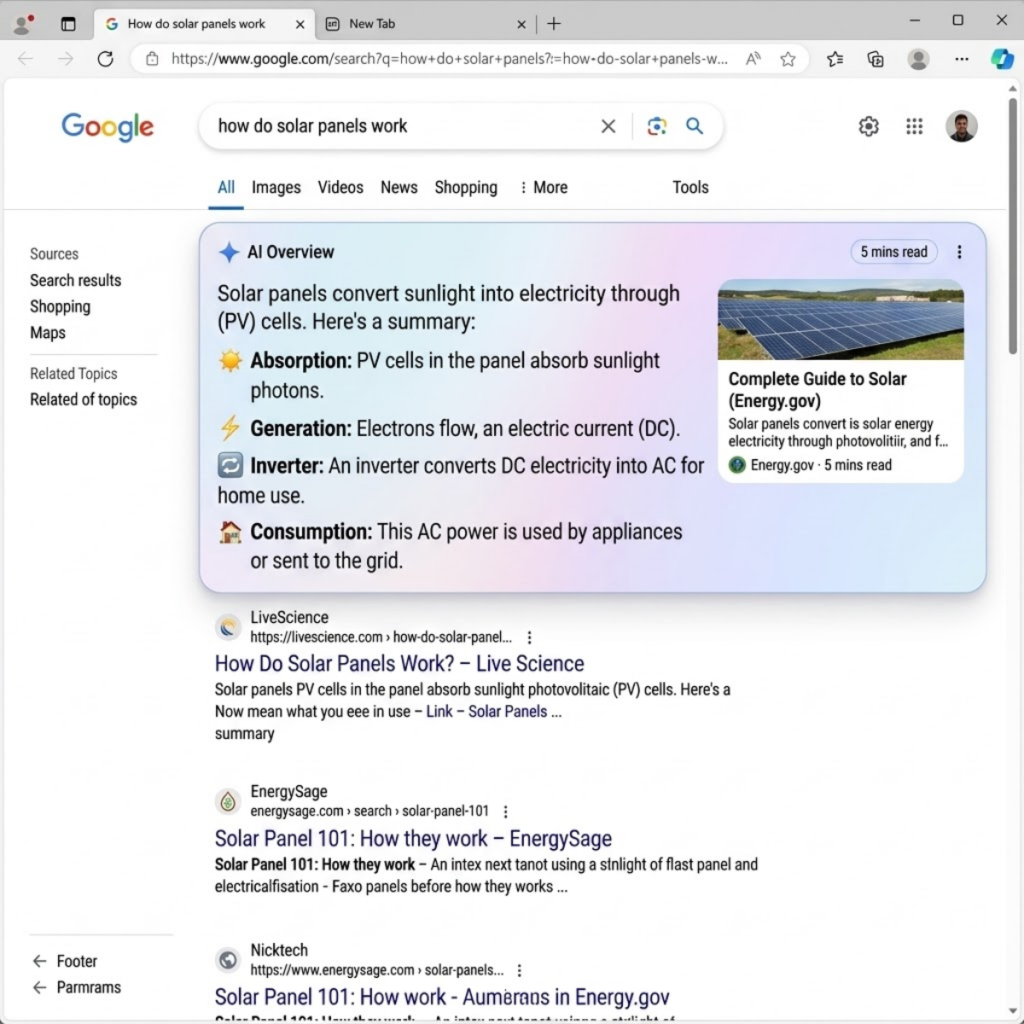
One of the changes in the way Google works in 2026 is the rise of Google AI Overviews.
Google is now giving people answers that Google AI generates on the search page instead of just showing the usual list of search results. Google AI Overviews are becoming a thing, and Google is using them more and more to help people find what they are looking for on the Google search page.
This creates a new challenge.
Many users now receive answers without clicking through to websites.
As a result, businesses are noticing:
- Lower click-through rates on some queries
- More competition for visibility
- Increased importance of authoritative content
- Greater focus on answer-based content
Ranking on page one is still valuable, but visibility alone is no longer the ultimate goal. Businesses now need content that can also appear inside AI-generated search experiences.
More Businesses Are Investing in SEO
Another reason SEO seems tough is the competition. A long time ago, lots of businesses did not care about SEO at all. Now every industry knows how important it is to be visible online and have good SEO. They all want to be on top of search engine results, which makes SEO harder.
Many businesses are working hard on SEO. That makes it tough to stand out. The competition for visibility is fierce, and SEO is a big part of it.
Whether you’re a local business, ecommerce brand, a SaaS company, or a service provider, chances are your competitors are actively investing in:
- SEO
- Content marketing
- Digital PR
- Technical optimization
- AI-powered marketing
This means businesses aren’t competing against a handful of websites anymore. They’re competing against entire marketing teams.
Content Is Easier to Create Than Ever
AI tools have dramatically reduced the barrier to creating content.
The good news?
Businesses can publish content faster.
The bad news?
Everyone else can too.
The internet is now flooded with generic articles that repeat the same information. Because of this, Google is placing greater emphasis on originality, expertise, and unique value. Businesses that simply publish AI-generated content without adding real insight are finding it increasingly difficult to stand out.
User Expectations Have Increased
Think about your own online behaviour.
How patient are you when a website loads slowly?
How long do you stay on a page that doesn’t answer your question?
Most users expect:
- Fast websites
- Clear answers
- Mobile-friendly experiences
- Helpful content
- Easy navigation
Google pays attention to these signals.
A website that provides a poor user experience may struggle even if the content itself is good.
This is why modern SEO now overlaps heavily with:
- UX design
- Website performance
- Content strategy
- Customer experience
Search Intent Matters More Than Keywords
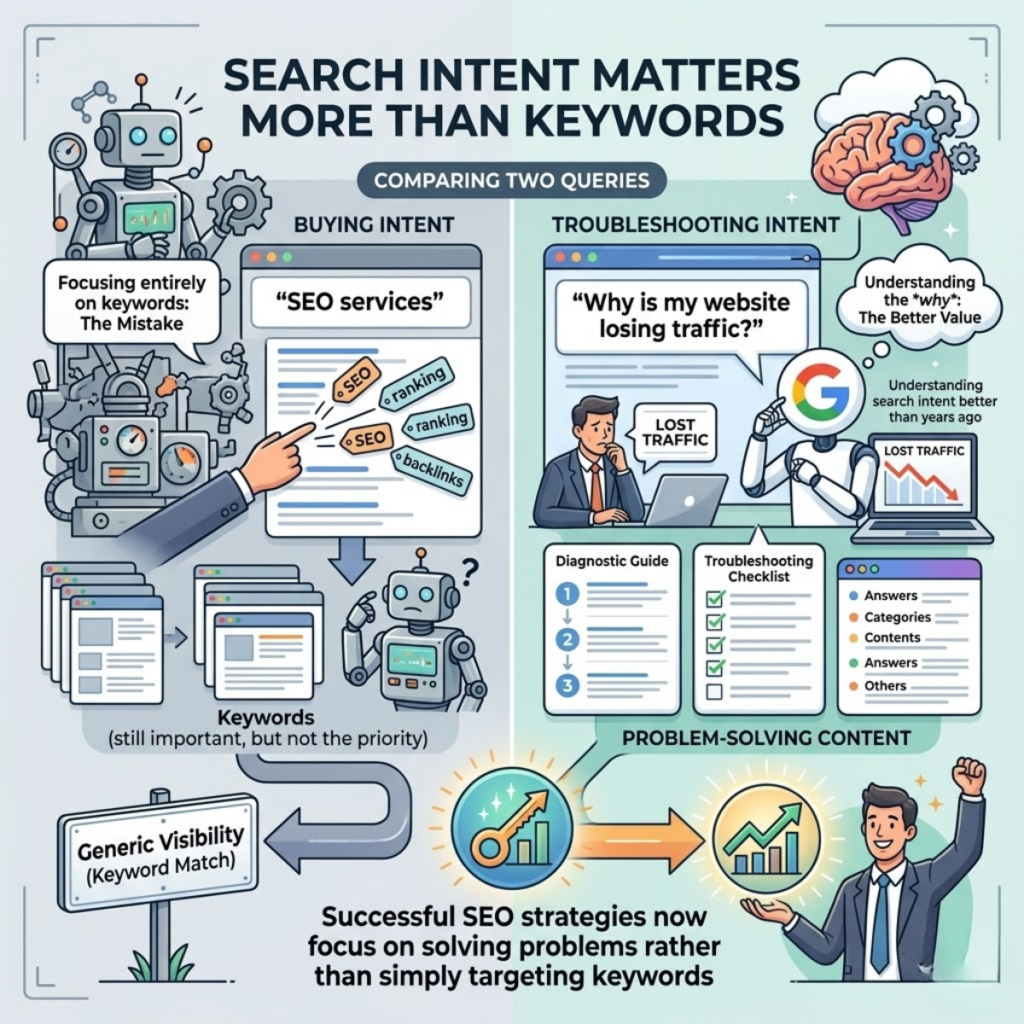
One of the biggest mistakes businesses still make is focusing entirely on keywords. Keywords remain important, but understanding why someone is searching has become even more valuable.
For example:
Someone searching:
“SEO services”
has a completely different intent than someone searching:
“Why is my website losing traffic?”
Google understands these differences much better than it did years ago.
Successful SEO strategies now focus on solving problems rather than simply targeting keywords.
SEO Is Expanding Beyond Google
Search behaviour itself is changing.
People now look for information through:
- ChatGPT
- AI assistants
- YouTube
- Social platforms
This means businesses need broader visibility strategies.
Modern SEO increasingly overlaps with:
- AEO (Answer Engine Optimization)
- GEO (Generative Engine Optimization)
- Brand authority
- Content visibility across multiple platforms
The goal is no longer just ranking on Google.
The goal is to be discoverable wherever users search.
So, Is SEO Harder in 2026?
Yes, but not for the reasons many people think.
SEO isn’t harder because Google wants to make rankings impossible.
It’s harder because:
- Competition is higher
- Search behaviour is evolving
- AI is changing discovery
- User expectations are increasing
- Low-quality content is easier to produce
The businesses succeeding today aren’t necessarily doing more SEO.
They’re doing better SEO.
They’re focusing on:
- Helpful content
- User intent
- Authority
- Technical performance
- Long-term trust
Final Thoughts
SEO in 2026 is no longer a game of chasing algorithms. It’s about understanding users better than your competitors.
Businesses that continue relying on outdated tactics may feel that SEO is becoming impossible. But businesses that adapt to AI search, prioritize user experience, and create genuinely useful content are still seeing strong results.
The question isn’t whether SEO is getting harder.
The real question is:
Is your SEO strategy evolving with the way people search today?
Because the future of SEO belongs to businesses that put users first and optimization second.
Frequently Asked Questions
Is Search Engine Optimization still worth investing in during 2026?
Yes. Search Engine Optimization remains one of the valuable long-term traffic sources for businesses, but Search Engine Optimization strategies must evolve as search behaviour changes.
Are Google Artificial Intelligence Overviews hurting Search Engine Optimization?
Artificial Intelligence Overviews are changing how users interact with search results. They also create new opportunities for businesses that produce authoritative and answer-focused content.
What is the biggest Search Engine Optimization challenge in 2026?
Increased competition, Artificial Intelligence-generated content saturation, and changing user behaviour are among the challenges businesses face today.
Is keyword research important for Search Engine Optimization?
Absolutely. However, understanding search intent and user needs is now just as important as identifying keywords for Search Engine Optimization.
What should businesses focus on for Search Engine Optimization in 2026?
Businesses should prioritize content quality, topical authority, technical Search Engine Optimization, user experience, Artificial Intelligence Engine Optimization, and Geographical Optimization strategies for Search Engine Optimization.