

Artificial Intelligence has transformed web development faster than almost any technology in recent years.
Today, developers can use tools like ChatGPT, Claude, GitHub Copilot, Cursor, and other AI assistants to generate code, build website layouts, write documentation, debug errors, and even create entire applications within hours instead of weeks.
From the outside, it looks revolutionary.
So why are many developers still skeptical?
If AI can generate code instantly, shouldn’t web development be easier than ever?
The answer is more complicated than most people think.
The reality is that developers don’t distrust AI because it writes code. They distrust the growing belief that AI can replace planning, architecture, experience, and good development practices.
In fact, many developers use AI every day.
The real issue isn’t AI.
It’s how people use it.
The Biggest Myth About AI Coding
One of the biggest misconceptions in web development today is the idea that if code works, it must be good code.
This misunderstanding is driving much of the excitement around AI-generated development.
For example, someone might ask:
“Build me a professional ecommerce website.”
Within seconds, AI generates:
- Product pages
- Navigation menus
- Shopping carts
- Checkout flows
- Everything appears functional.
- The website loads.
- Buttons work.
- Pages display correctly.
At first glance, it seems like AI has solved web development. But experienced developers know something important:
- A website isn’t judged by how well it works today.
- It’s judged by how well it performs six months, one year, or three years later when new features, integrations, users, and business requirements are added.
- This is where many AI-generated projects begin to struggle.
AI Is Only as Good as the Prompt
One reason experienced developers often achieve better results with AI is because they understand how to communicate with it effectively.
Consider these two examples.
Poor Prompt
Build me an ecommerce website.
This tells AI almost nothing.
The system has to guess:
- Framework
- Design structure
- Security requirements
- User experience
- Performance goals
- Scalability needs
The result might work, but it is unlikely to be optimized for a real business.
Better Prompt
Build a responsive ecommerce website using Next.js and Tailwind CSS with reusable components, secure authentication, mobile optimization, SEO-friendly architecture, product filtering, and scalable folder structure.
Now the AI has context.
It understands the requirements.
It understands the technology stack.
It understands the expected outcome.
The difference between these two outputs can be enormous.
This is why many developers argue that prompt engineering is becoming one of the most valuable skills in modern development.
Better instructions produce better results.
The Problem Isn’t AI, It’s Unrealistic Expectations
One reason AI generates so much debate is because many people now believe it can replace entire development teams.
Social media is full of headlines such as:
“I built a SaaS product in one weekend using AI.”
“I created an app without hiring a developer.”
“AI built my entire website.”
While these stories are impressive, they often leave out critical details.
What they rarely discuss is:
- Security testing
- Code reviews
- Scalability planning
- Performance optimization
- Long-term maintenance
Building software is only one part of development.
Maintaining software is often the harder challenge.
Many AI-generated projects look excellent during launch but become increasingly difficult to manage as complexity grows.

Why Developers Often Find Problems Later
Across developer communities, a common pattern appears repeatedly.
Someone uses AI to build a website or application.
Everything works initially.
The project launches successfully.
Then six months later problems begin to emerge.
Developers frequently discover:
- Repeated code structures
- Poor architectural decisions
- Weak security implementations
- Inconsistent coding patterns
- Performance bottlenecks
The issue isn’t that AI failed.
The issue is that the project lacked proper planning from the beginning.
AI generated exactly what it was asked to generate.
The problem was the instructions.
AI Can Generate Bugs Faster Too
Most discussions focus on how quickly AI creates solutions.
Few people talk about how quickly it can create problems.
A human developer might accidentally introduce a bug into one feature.
An AI tool can unintentionally repeat the same mistake across dozens of files.
Developers regularly encounter AI-generated code containing:
- Deprecated functions
- Outdated libraries
- Poor database queries
- Weak validation rules
- Security vulnerabilities
Without proper review, these issues can easily make their way into production environments.
This is one reason experienced developers still inspect AI-generated code carefully.
Speed is valuable.
But speed without quality creates technical debt.
Why Experienced Developers Get Better Results From AI
A beginner and a senior developer can use the same AI tool and receive completely different outcomes.
Why?
Because experienced developers understand:
- Software architecture
- Scalability
- Security
- Performance optimization
- Database design
- User experience
When AI generates code, experienced developers know:
- What to keep
- What to modify
- What to improve
- What to reject
This is why AI often feels much more powerful in the hands of skilled developers.
The tool hasn’t changed.
The person using it has.
AI Doesn’t Understand Business Goals
Web development isn’t simply about creating pages and writing code.
Businesses need solutions.
For example, a company may require:
- Customer portals
- CRM integrations
- Booking systems
- Membership platforms
- Internal workflows
When developers hear these requirements, they immediately begin thinking about:
- User journeys
- Data flow
- Security
- Scalability
- Future growth
AI typically focuses on the task directly in front of it.
It doesn’t naturally think five years ahead.
This is why human expertise remains essential.
Businesses don’t just need code.
They need systems designed to support growth.
The Rise of “Vibe Coding”
A growing trend known as “vibe coding” has become increasingly popular. Instead of writing code manually, users describe what they want, and AI generates the application.
For prototypes and simple projects, this approach can be extremely effective.
However, problems often appear when businesses attempt to scale these projects.
Applications created through minimal prompting may lack:
- Consistent architecture
- Proper documentation
- Security planning
- Long-term maintainability
Vibe coding can build something quickly.
Building something sustainable is a different challenge entirely.
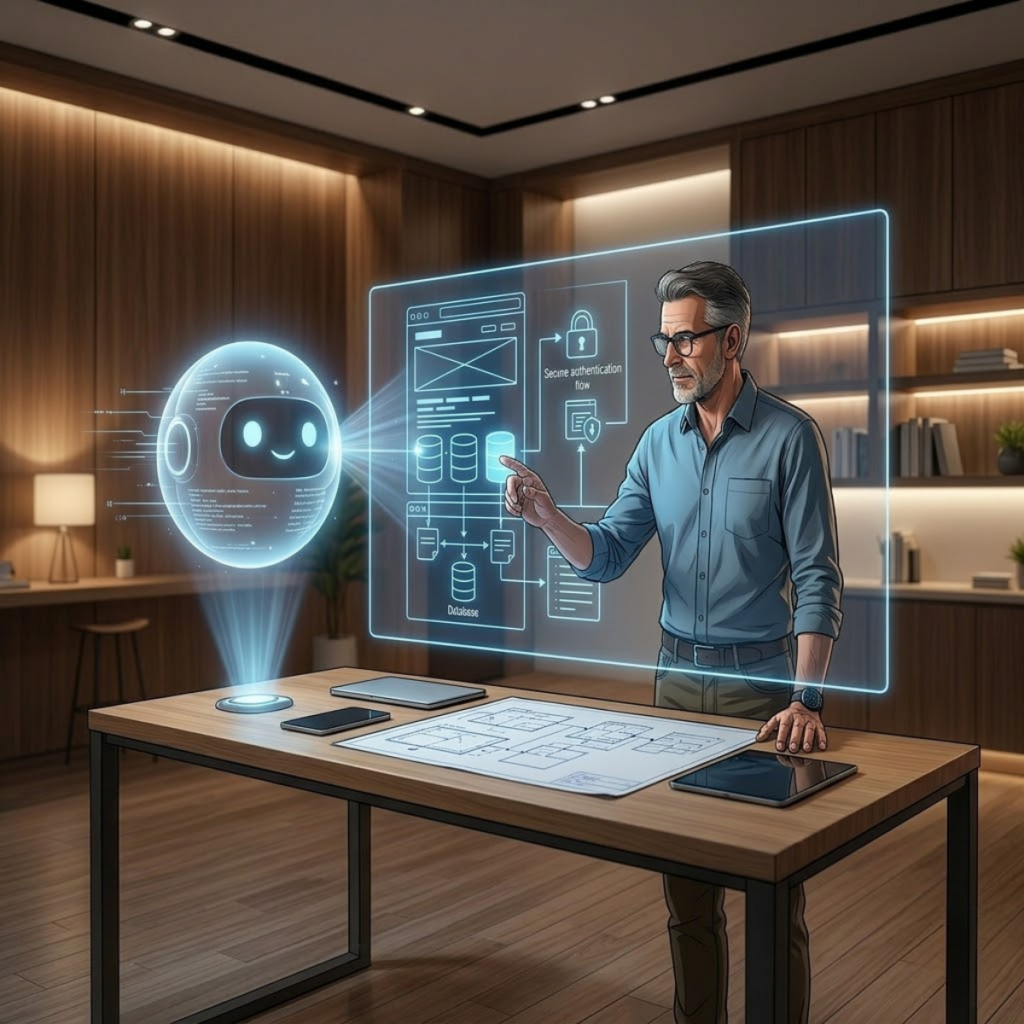
The Best Developers Use AI as a Partner
Interestingly, the developers getting the most value from AI aren’t trying to replace themselves.
They’re using AI strategically.
Common use cases include:
- Writing boilerplate code
- Creating documentation
- Debugging issues
- Generating test cases
- Learning new frameworks
- Automating repetitive tasks
This allows developers to spend more time focusing on:
- Problem solving
- Architecture
- Strategy
- User experience
- Business requirements
AI becomes a powerful assistant rather than a replacement for expertise.
So, Why Do Developers Still Distrust AI?
The answer isn’t because developers are afraid of technology. Developers have always adopted tools that improve productivity.
The real concern is that many people misunderstand what AI is designed to do.
AI is excellent at:
- Generating code
- Explaining concepts
- Automating repetitive work
- Increasing productivity
But software development involves much more than code generation.
It involves:
- Planning
- Architecture
- Security
- Scalability
- Maintenance
- Business strategy
These areas still require human judgment.
Final Thoughts
AI has become one of the most powerful tools ever introduced to web development.
It can generate code, accelerate workflows, improve productivity, and help developers build software faster than ever before.
But after all the debates surrounding AI-generated websites and applications, one thing becomes clear:
AI is not the problem.
The problem is often poor prompting, unrealistic expectations, and the assumption that generated code is automatically production-ready.
- When people give AI vague instructions, they often receive vague solutions.
- When developers provide detailed requirements, technical constraints, architecture guidelines, and business context, the quality of the output improves dramatically.
- This is why prompt engineering is becoming such an important skill.
- The quality of AI-generated code is often a reflection of the quality of the instructions behind it.
- The developers succeeding with AI today are not replacing expertise.
- They are combining expertise with AI.
- The future of web development isn’t AI versus developers.
- It’s developers who understand how to work with AI outperforming those who don’t.
- Because in modern software development, having access to AI is no longer an advantage.
- Knowing how to use it effectively is.
Frequently Asked Questions
Do developers actually hate AI?
No. Most developers actively use AI tools. Their concerns usually involve code quality, maintainability, security, and unrealistic expectations.
Why does AI-generated code sometimes contain bugs?
AI generates code based on patterns and prompts. If instructions are vague or incomplete, the resulting code may contain errors, inefficiencies, or vulnerabilities.
Is prompt engineering important for coding?
Yes. Better prompts provide better context, leading to more accurate, maintainable, and scalable code generation.
Can AI build a professional website?
AI can generate professional websites, but complex projects still require human expertise for planning, architecture, security, and long-term maintenance.
Will AI replace web developers?
AI will continue changing how developers work, but human expertise remains essential for strategy, architecture, security, and solving complex business problems.